Friday, August 18, 2006

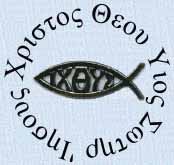
The Gospel of Jesus Christ, the Son of God (Mark 1:1)

There are three books of the Bible that begin with the word “beginning.” In the book of Genesis, written many centuries before Mark’s gospel, we read about how, “In the beginning, God created the heavens and the earth.” In the gospel of John, written several decades after Mark’s gospel, we read about the preexistence of Jesus Christ with the words, “In the beginning was the Word, and the Word was with God and the Word was God.” John goes on to tell us that the Word became flesh and dwelt among us in the person of Jesus Christ. Between these two beginnings, both canonically and chronologically, we have Mark’s gospel, which begins with these words, “The beginning of the gospel of Jesus Christ, the Son of God.”

This one verse of Mark’s gospel stands like a title over the entire book. The gospel was not new. It was first announced to Adam and Eve and to the serpent in the garden after they sinned. Genesis 3:15 is called the protoevangelium, or the “first gospel,” because here in the aftermath of their disobedience, God promised salvation to them. They ate from the forbidden tree, which God had said, “In the day that you eat of it you shall surely die.” Ashamed of their nakedness, they stitched leaves together to cover themselves and attempted to hide from the presence of God. You know that God was not fooled. He called them out and drew a reluctant confession from them. But instead of pronouncing their death, he announced their redemption, saying to the serpent, “I will put enmity between you and the woman, and between your seed and her seed. He (meaning the seed of the woman) shall bruise you on the head, and you shall bruise Him on the heel.” This promise declared that from the woman, there would come a Redeemer who would suffer, but through His suffering, He would destroy the works of Satan. And there was a death on that day – but Adam and Eve, though they died spiritually because of their sin, did not die physically as had been announced beforehand. Instead a substitute died in their place. In Genesis 3:21, God made for Adam and Eve garments of skin to cover them, indicating that the works of their own hands were not sufficient, but through the slaying of a sacrificial substitute they could be covered. And as a sign of Adam’s faith in God’s promise, he gave to his wife the name “Eve,” saying that she would be the mother of all the living. So the gospel did not begin when Jesus came. Peter declared in 1 Peter 1:20-21, “He was foreknown from the foundation of the world, but has appeared in these last times for the sake of you who through Him are believers in God, who raised Him from the dead and gave Him glory, so that your faith and hope are in God.”

So Mark, who was putting in writing the details of the life and ministry of Jesus as he learned them from the Apostle Peter, is not saying that this is the beginning of the gospel, but it is the beginning of the fullness of the gospel which is made known through the person of Jesus Christ. Though God had announced it for centuries in His word in the Old Testament, in Jesus Christ, He came to accomplish the redemption which the gospel promises once and for all. And this gospel continues to be the only hope for humanity in our day as well.

But the gospel is not a list of doctrinal facts, it is not a formula, it is not a prayer or a recitation. The gospel is a person. The gospel is Jesus Christ, the Son of God. This threefold description of the Redeemer is not just a title for Mark’s gospel, but is also a concise outline of the entire book. This Jesus whom we meet in Chapter 1 is declared to be the Christ by Peter at the turning point of the book, Mark 8:29-33. And in the culmination of Mark’s gospel, he is declared by a gentile centurion at the foot of the cross to be the Son of God. So in this way, the name Jesus Christ, the Son of God, sets the framework for the entire Gospel of Mark. This is similar to Matthew’s Gospel, which begins by referring to Jesus as “Immanuel: God with us,” (1:23) and ends with His promise “I am with you always even to the end of the age” (28:20). John’s gospel has similar framework, referring to Jesus in 1:1, “The Word was God,” and concluding with the testimony of Thomas who worships Jesus saying, “My Lord and my God” (20:28).[1]

This is the one true and eternal gospel: Jesus is the Christ, the Son of God. This gospel is contrasted with a multitude of false gospels that have flooded the pages of human history and continue to abound today. The word means “good news,” and the good news for us is that the waiting is over; God has sent the redeemer to us. He is Jesus. He is the Christ. He is the Son of God. It is my prayer today that as we unpack this threefold title of our Lord, we will come to know Him better, and that perhaps someone will, for the very first time come to believe this gospel.

I. The Gospel is Jesus

The name Jesus was a common one in the first century. It was the Greek equivalent of the Hebrew name “Yehoshua,” which was later shortened to “Yeshua.” The most well-known bearer of this name prior to the first century was Joshua of the Old Testament. Many people named their sons after this biblical hero. Four of the 12 high priests in the first century were named Jesus. First century Jewish historian, Josephus, mentions 20 prominent individuals named Jesus, ten of whom who were contemporary with the Jesus of the Gospels. Ossuaries of Greek and Hebrew individuals bear the name Jesus. So, this is why Jesus began to be referred to as Jesus of Nazareth – to prevent confusion with other Jesuses in his day. But it is interesting to note that by the early part of the second century, this name was rare. The followers of Christ would have avoided the name out reverence, but others would have avoided it out of contempt. For whatever reason, there was something about this Jesus that made the name unsuitable for anyone else to bear.

Indeed, this Jesus was not just one of many others to bear the same name. There was something about this name. It was not chosen for Him by his earthly parents – it was given to Him by God. As Joseph processed the news of Mary’s pregnancy, an angel came to him and said, “Joseph, son of David, do not be afraid to take Mary as your wife; for the Child who has been conceived in her is of the Holy Spirit. She will bear a Son; and you shall call His name Jesus, for He will save His people from their sins."

The name Jesus means, “The Lord Saves.” So, when the angel announced the name, he explained to Joseph that this was not just a name to honor a biblical hero or an ancient ancestor. When this name was laid upon this Jesus, it was given fullness of meaning. His name pointed to His purpose – and His purpose was salvation. And salvation from sin is what the Gospel is all about. The Gospel is Jesus.

II. The Gospel is Christ

Our word CHRIST comes to us from Greek, where it was used to render the Hebrew word meshiach, or “messiah.” You understand that this was not the last name of Jesus. It was His title. He was “The Christ.” Messiah and Christ are equivalent terms, and both mean “anointed one.” This refers to God’s anointing a person, commissioning that one for a unique task. In this case, that task is the redemption of all creation from the curse of sin.

In the Old Testament, prophets, priests and kings were all anointed to serve God in specific ways. Faithful believers in God looked forward to the coming of one who would perfectly fulfill all three of these roles. Alfred Edersheim was born into a Jewish family and educated in the Torah and Talmud. When he became a Christian in the early 1840s, he began to use his knowledge of Jewish scripture and tradition to open Christian eyes to how the Bible had been understood by Jewish rabbis for centuries. In his book The Life and Times of Jesus the Messiah, Edersheim compiled an annotated list of Old Testament passages that the rabbis had understood to have Messianic implications. His sources were the works of the rabbinic scholars in the Targums, the Talmud, and the Midrash. From these works, Edersheim counted 456 Old Testament passages which had been attributed to the coming Messiah. It is interesting that 31 of the 39 Old Testament books are cited. The ancient Jewish rabbis could hardly open their scrolls without seeing reference to a coming Messiah who would be the ultimate prophet, priest and king. Edersheim said that the rabbinic commentaries on Messianic prophecies make it clear that “All the prophets prophesied only of the days of the Messiah,” and “The world was created only for the Messiah.”[2]

Many faithful Jews were expecting Him to come (John 1:19-20; 7:31, 41-42; 10:24; Matt 22:42; Luke 2:25, 38; 3:15; 23:39) The Samaritans were looking for the Messiah as well (John 4:24). In fact, many rabbis understood the Scriptures, and Daniel 9 in particular, to teach that the time was right for Messiah to come when Jesus entered the world. In fact, not only did Jesus claim to fulfill the Messianic prophecies, a number of others alive during that period of time did as well. But Jesus actually did what the prophecies said He would do. His teaching and His miracles authenticated His claim to be Messiah. In Luke 4, Jesus entered the synagogue of Nazareth on the Sabbath and stood up to read the Scriptures. That Sabbath reading would have been established long before Jesus ever stepped into the Synagogue, but on that day in God’s foreknowledge and providence, Jesus read from Isaiah 61:1-2: The Spirit of the Lord is upon Me, because He has anointed Me to preach the gospel to the poor. He has sent Me to proclaim release to the captives, and recovery of sight to the blind, to set free those who are oppressed, to proclaim the favorable year of the Lord.” And when he sat down after that reading, He said, “Today this Scripture has been fulfilled in your hearing.”

One wonders why so relatively few people acknowledged Jesus as the long-awaited Messiah? It is because by the first century, the Rabbis had formed an image of the Messiah based on nationalistic hopes rather than biblical promises. According to their teaching, the Messiah would be a Davidic king who would deliver Israel from Roman oppression, restore the kingdom of Israel to its former glory, and raise it above its enemies. There was no room in this line of thinking for a Messiah who was coming into the world to serve humanity, to suffer at the hands of men, and to be crucified. But this is exactly what He did in order to deliver humanity from a greater oppressor than Rome. To be free from Rome was to still be a slave to sin. But to be free from sin was to be free indeed.

Much has been made over the “Messianic Secret” in Mark, that Jesus is only referred to as Christ a handful of times, and usually when He is acknowledged as such, He commands silence about it. Likely the reason for this is because He had not come in the way that the people were expecting, and did not want to deal with the conflicting expectations of this nationalistic deliverer. He was on a mission, and that mission was completed on the Cross, as Jesus cried out “It is finished.” What was finished was the redemption of humanity from sin that He was anointed to accomplish as the Messiah-Christ. And when Jesus was raised from the dead, all His claims were validated. Peter proclaimed in his Pentecost sermon that “this Jesus God raised up again, … Therefore let all the house of Israel know for certain that God has made Him both Lord and Christ--this Jesus whom you crucified” (Acts 2:32, 36).

The Gospel is Jesus, and though many people were called by that name in the First Century, only this Jesus can lay claim to the title of Christ. The Gospel is Christ – Jesus is the promised Messiah and Christ of God – the anointed prophet, priest, and king who had come to deliver mankind from sin.

III. The Gospel is the Son of God

T. C. Horton and Charles E. Hurlburt, in their brief book entitled, The Names of Christ, identify 319 names or descriptive titles that refer to Jesus in the Scriptures. Yet none of them have been misunderstood more than this one: The Son of God. This phrase is employed by humanistic thinkers to refer to all of humanity as “the sons and daughters of God.” Therefore, with this understanding, Jesus was just another person. You should know that the Bible NOWHERE speaks of all humanity as the children of God. In fact, in John 8:44, Jesus explicitly states that some very religious people would be more accurately described as the sons and daughters of Satan. So, the humanistic understanding of the phrase “son of God” is bankrupt to define Jesus.

So is what I will call the “religious” understanding. This has several different varieties, but it would classify all religious people, or people of a particular religion, as children of God. Indeed, John 1:12 does say that those who believe in Christ are given the power to become the sons of God. In 1 John 3, that same apostolic writer says that as Christians we are called sons of God, and such we are. Paul said in Romans 8 that we have been given the Spirit of Adoption whereby we cry out “Abba Father.” So there is a sense in which this understanding of the phrase “son of God” is correct. But when we say Jesus is the Son of God, do we mean that He is of no qualitative difference than those who become sons of God by faith? Absolutely not. You and I have the opportunity to be adopted as sons and daughters of God. Jesus Christ is the only begotten Son of God. He never became the Son of God. He is the Son of God by nature; we are sons of God by grace. At the age of twelve, He stupefied his parents and everyone in the temple when He claimed that He was in His Father’s house. He knew from the beginning that He is eternally the Son of God. And this brings us to the third misunderstanding.

Many people, including many who claim to be Christians, assume that to be Son of God is to be less than God. The question for us ought to be, when Jesus claimed to be the Son of God, what exactly did He mean, and what do the biblical writers mean when they ascribe the title to Him? Jesus is called Son of God by angels, demons, followers, and twice by God the Father Himself. Do these figures all understand Him to be something less than absolutely God? I submit to you that the Bible is clear about this – when Jesus claimed to be the Son of God, and when others claimed it of Him, the claim was a direct statement of deity – that He is indeed fully God.

When Jesus claimed to be God’s Son, he was not speaking of our human conception of parent and child, whereby the lesser derives his being from the greater, and is subsequent to, subordinate to, and dependent upon the greater. Rather, He is speaking of a sameness of nature and an equality of being. Lorraine Boettner says, “The terms ‘Father’ and ‘Son’ are not at all adequate to express the full relationship which exists between the first and second Persons of the Godhead. But they are the best we have. Moreover, they are the terms used in Scripture, and besides expressing the ideas of sameness of nature they are found to be reciprocal, expressing the ideas of love, affection, trust, honor, unity and harmony, -- ideas of endearment and preciousness.”[3] And though the terminology is not adequate, it does express to us the reality of the incarnation: that God came to us in Jesus Christ to complete the redemption of mankind according to His perfect will. As the Son, Jesus was full God and fully man, and in His humanity, He submitted Himself perfectly to the will and work of the Father.

When Jesus spoke of His divine Sonship, He could say: “He who does not honor the Son does not honor the Father who sent Him” (John 5:23). “If you knew Me, you would know My Father also” (John 8:19). “He who believes in Me does not believe in Me but in Him who sent Me. He who sees Me sees the One who sent Me” (12:44-45). “If you had known Me, you would have known My Father also; from now on you know Him, and have seen Him. … He who has seen Me has seen the Father” (John 14:7, 9); “He who hates Me hates My Father also” (John 15:23). “I and the Father are One” (John 10:30). When Jesus said that, those who heard Him understood Him correctly when they sought to stone him for blasphemy, saying in John 10:33, “You being a man, make yourself out to be God.” Similarly, in John 5:17, when Jesus said, “My Father is working until now, and I myself am working,” his hearers “were seeking all the more to kill Him, because He … was calling God His own Father, making Himself equal with God.” Now, if that is not what Jesus was claiming, then in either case, He could have very simply said, “No, that is not what I meant.” But He didn’t say that, because it was exactly He meant.

He was, and is, the Son of God. We might also phrase it that He an eternally divine member of the Triune Godhead, God the Son, together with God the Father, and God the Holy Spirit. And just as Mark’s gospel begins with this designation of Jesus as Christ, and the Son of God, it climaxes with Peter’s designation of Jesus as the Christ in 8:29, and it culminates at 15:39 in the shadow of the cross with a Roman centurion, perhaps blood on his hands from the hammer and nails, looking upon the crucified Jesus as He died and saying, “Truly this man was the Son of God.”

This is the gospel: The gospel is Jesus. The gospel is Christ. The gospel is the Son of God. Before the crucifixion, Jesus stood before the high priest, who asked Him in Mark 14:61: “Are you the Christ, the Son of the Blessed One (a Jewish idiom for “God”)?” Jesus answer was direct and powerful. With the words of the divine name of God revealed to Moses in the Old Testament, Jesus said, “I AM.” He is. He is Jesus. He is Christ. He is the Son of God.

In C. S. Lewis’s classic work, God in the Dock, he asks the question: “What are we to make of Christ?” Lewis says that this is as comical as a fly sitting deciding what it is going to make of an elephant. “‘What are we to make of Christ?’ There is no question of what we can make of Him; it is entirely a question of what He intends to make of us. You must accept or reject the story.”[4] That’s it. The presentation of Jesus in the Gospel of Mark, indeed in the entire New Testament, is that of Him as Christ and Son of God. There is no place for our deliberation over what we shall make of Him. The question is what He will make of us as we accept or reject Him on the basis of His claims.


[1] We would refer to this phenomenon of bracketing with the names of Christ as a christological inclusio. See The NET Bible (Biblical Studies Press, 2001), p1791, n2.

[2] Sanh. 99a and 98b, cited in Edersheim, Life and Times of Jesus the Messiah, 1.161-162.

[3] Lorraine Boettner, The Person of Christ (Grand Rapids: Eerdmans, 1943), 31.

[4] C. S. Lewis, God in the Dock, “What Are We to Make of Christ?”

Saturday, August 12, 2006

1 Samuel 14:1-23: Simple Faith and Self-Absorbed Spirituality


Here in the first half of this chapter, we are presented with the stark contrast between Saul and Jonathan. As I have meditated on this chapter, I have noticed several important truths that need to be expounded, but each of them boil down to the difference between simple faith and trust in God and a pseudo-religion of self-absorbed spirituality.

When Saul came to power in Israel, God declared in 9:16 that this would be the man who would deliver Israel from the hand of the Philistines. Here we are, not too many chapters later, and we see Saul’s army depleted, discouraged, deserting, and deliberating how they might escape the impending destruction that the Philistine raiders will certainly level upon them. How disappointing! But Saul’s son Jonathan was one of a few who had not given up on God’s power or His faithfulness. He still recalled that the promise of God was that the people would be delivered from the Philistines. In 13:3, Jonathan and 1000 men smote a Philistine garrison in Geba, but in 13:4 we see that Saul took all the credit for the victory. Now, with their forces scattered and doom on the horizon, Jonathan tires of waiting for his father to take action, and he steps out in faith. This is the first contrast I want to point out.

I. Simple Faith is Active, but Self-Absorbed Spirituality is Reactive

Saul was trying desperately to keep himself out of harm’s way, staying under the pomegranate tree, not risking any further depletion of his 600 troops. Jonathan was ready to move. God had promised deliverance, and Jonathan knew that it would not be received by sitting and waiting. So he took action. He did not tell his father his plan because he knew that his father’s faith was not great enough to trust God for this victory, and probably because he did not want to involve his father in the plan and risk ruining his chances for victory.

So Jonathan and his armor bearer set out together; two men, united in purpose and believing in God. They climbed by hands and feet down a sharp crag known as “Bozez,” which means “slippery,” and up another one called “Seneh,” which means “thorny.” But Saul rested in the shade and did not take action until the battle was nearly over.

While we must be sure to count the costs of our efforts, we must also be sure that we are not failing to walk by faith. There is such thing as being careful, but there is also being carnal. And whenever we do not trust God to supply what He has promised, we cannot call that careful. It is sin. We sing an old song called “Standing on the Promises.” I wonder, if we really stood on the promises of God, how would our activity as Christians and as a church be different? More often, rather than standing on the promises, we are sitting on the premises, not actively walking by faith, but waiting until something happens that forces us to react in fear. Jesus Christ has promised that He will build His church, and the gates of hell will not prevail against it. Like Jonathan, we ought to be taking the battle to the enemy, believing God will honor the promise of His word. But all too often we are like Saul, resting in shady comfort while the enemy gains more and more ground. This is one difference between simple faith and self-absorbed spirituality.

II. Simple Faith Seeks the Fellowship of the Faithful; Self-Absorbed Spirituality Seeks the Company of Hirelings.

Jonathan is accompanied in his maneuvers by his armor-bearer. Now we might say, “What choice did the armor-bearer have?” Jonathan never talks it over with him, or asks his input. He never really invites him to come along. He says in v1, “Come!” and he says it again in v6. But notice what the armor-bearer said to him in v7. He doesn’t begrudgingly accept his marching orders as an obedient soldier. He says, “Do all that is in your heart; turn yourself, and here I am with you according to your desire.” Literally, the Hebrew reads, “I am with you like your heart.” Some have translated it, “I am with you heart and soul.” This means that he was going along in faith, believing just as Jonathan did that God was going to give them victory. Perhaps this man’s spiritual strength was the reason Jonathan chose him as armor-bearer. Or it could be that his working with Jonathan led to his spiritual strength.

Saul, on the other hand, enjoyed the company of Ahijah (v3). He was the son of Ahitub. Ahitub was the brother of Ichabod. Do you remember him? He was the one who was born as the news of the Ark’s capture reached Israel in Chapter 4? His name means “Where is the glory?” and he was given this name because his mother said that the glory has departed from Israel. Ichabod’s father was Phinehas. He was part of a wicked priestly duo with his brother Hophni who were sexually immoral and greedy with the sacrifices and offerings of God’s people. They were the sons of Eli, who, because he refused to deal with the ungodliness of his sons, was rejected as God’s priest. Ahijah is the first descendant of Eli we have read about since Chapter 4. Samuel had been raised up by God to be His man in Israel. But Samuel had announced God’s rejection of Saul. So Saul had nothing more to do with him. Instead, the reject king called to his side a reject priest who would be a spiritual yes-man and a good-luck charm.

Saul and Ahijah remind me of a factory supervisor and a clock-maker I read about some time ago. Every morning on his way to work, the factory supervisor would stop in front of the clock shop and set his watch to correspond with the clock in the window. One day the clock-maker asked what he was doing, and he said, “I am responsible for sounding the horn to end the day at the factory. My watch does not keep time, so I set it here every morning. The clock-maker, looking humored and embarrassed, said, “Well sir, my clock doesn’t keep good time either, so every afternoon, I set it to the horn at the factory.”

We have to be careful whose company we keep and upon whose counsel we depend. Jonathan and Saul each had supportive encouragers on their side. But in Jonathan’s case, his companion was a man of faith who was willing to risk his life on his trust in the promises of God. In Saul’s case, his companion was so dull to the real presence of God that he did not realize that he was no longer anointed for office. We have to make sure that we know the difference between godly and religious. The world is full of religious people, and whatever it is we want to do, we can find someone with a holy book and a religious trinket to give approval to it. But the godly person knows the will of God and seeks to live it. This person is wise in the Word, and discerning about what it is that God honors and approves. So, like Jonathan, we need godly people around us who will prompt us to walk in faith; not religious people who will just give a passing wink at our whims and wishes.

III. Simple Faith Manifests Gods Power; Self-Absorbed Spirituality Seeks to Manufacture God’s Power

Jonathan set out with one companion to take the battle to the enemy’s camp. He did not try to sneak in, but showed himself plainly to them, and allowed them to invite him up for a beating. He scaled down one cliff and up another by hand and foot. If victory was going to be experienced in this endeavor, it would have to be of the Lord. No human ability or strategy could accomplish a feat like this.

Saul, in v18, called Ahijah to his side. We read in v3 that Ahijah wore an ephod. An ephod was part of the priestly garments, and is normally associated with the pouch wherein the Urim and Thummim were kept. These were tools that the priest would use on occasion to determine God’s will. It was sort of like casting lots. No one really knows how it worked, and it is probably a good thing. People would be trying to copy it in our day and say they had access to a forgotten art of divination. We had this “church leader” in our town in Maryland who ran a hardware store on the side, and he was so convinced that he was of the priestly lineage, that he had bells and pomegranates sown onto the hem of his bluejeans. I can see that guy wearing an ephod and breaking out the Urim and Thummim.

When Saul called Ahijah in v18, we read that he said, “Bring the ark of God here.” Now, the Septuagint, which is a Greek translation of the Hebrew Old Testament, reads differently, and that is significant, because it is based on an older text than we have available to research today. We call this a vorlogge – a text that came before. The Hebrew Old Testament on which the Septuagint is based reads ephod instead of ark here. And it really makes more sense of the passage, since we are told in v3 that he wore the ephod, and as far as we know, the ark remains at Kiriath-jearim where it went after returning from the Philistines in Chapter 7. So I am operating under the assumption that Saul asked Ahijah to come with the ephod so he could determine whether or not to enter the fracas. And while Ahijah’s hands were in the pouch, perhaps he was saying a prayer or some sort of incantation, or who knows what a reject priest does when he attempts to divine the will of God, Saul noticed that the battle was continuing and increasing, and he could resist no longer. I believe that chief among his fears was that a victory was going to be won and he would not be able to take the credit for it as he had done before. So before the priest could give him a decision, Saul ordered him to remove his hand (this only makes sense if we are talking about the ephod – if it was the ark, he wouldn’t have been touching it!), and off he went into the battle with his troops. But by this time, the battle was nearly over, and the victory nearly accomplished. It was not accomplished by the complicated religiosity of Saul and Ahijah but by the simple faith of Jonathan and his anonymous armor-bearer.

As we attempt to serve God in our day, we must remember that we have not been called to ritual observance and hasty planning. We have been called to walk with God by faith. I think Henry Blackaby’s book Experiencing God was important in many regards but perhaps none more significant than this: in that book, Blackaby called the churches of our day to engage in what he referred to as God-sized tasks. He indicted most churches who only set out to do what they can do in their own power, and said, if that is all we can do, we don’t need God. We need to embark on adventures of faith that will only be possible if the Lord is with us. When was the last time we said, “We will step out on faith and do this: ____________________. And the only way we can do it is if God shows up and shows off on our behalf for the glory of His name!”? We don’t often see the supernatural because we don’t often attempt it. People in our day wonder, “Where is the God of Elijah, which consumed the sacrifices with fire from heaven?” But the greater question is where are the Elijahs of God who are willing to stand in the face of opposition and say, “ God prove yourself through me, through us, as we step out in faith”? Only as we attempt the God-sized tasks will we manifest the power of God. All other efforts are only carnal attempts to manufacture His power by human ingenuity, and are destined to fail at worst, or be overwhelmingly mediocre at best.

IV. Simple Faith Lacks Nothing; Self-Absorbed Religion Lacks Everything

In the end, as we look back on this account, we see success coming to a band of two kindred souls who are determined to live for God against all human odds. They lacked numbers, they lacked strategy, they lacked weaponry, but they had the Lord, and with Him, victory was certain. For Saul, on the other hand, even with 600 men, even with an “expert” in his corner, and all the accoutrements of organized religion, he lacked the power of God, and in that, he lacked everything.

So we have to ask ourselves two questions: What do we have? And What do we lack? On the surface, it does not matter what we appear to have if we lack personal faith and the manifest presence of God. And if we have that, then it does not matter what we lack, for simple faith lacks nothing of significance.

In high school, I completed several hours of ground instruction for flying. I never did any in-flight training, but I did get to fly with an instructor one time in a little Cessna. I piloted the plane through take-off at Smith Reynolds Airport, flew it around Pilot Mountain, and brought it in for a bumpy, but safe landing. Never once did I lose sight of the ground. The entire route was flown by just looking down and following the line of Highway 52 through northern Winston-Salem and back again. In aviation, this is called VFR: Visual flight rules. However, thoroughly trained pilots are able to fly their aircraft even when they cannot see the ground or the horizon. In a cloud cover, in darkness, and in the worst of conditions, they are trained to pilot the plane according to IFR: Instrument flight rules. They trust their gauges and instruments to lead them when they cannot see. And thus, they can fly farther, and they can fly in more diverse and challenging conditions than those who can only fly by sight. So, in the life of faith, we must not rely on what is seen but what is unseen. Even when the darkness or the clouds of doubt obscure our path, knowing that we are walking according to God’s promises, in His presence, and with His power, we can be confident that He will bring us through victoriously.

We are not fighting wars of flesh in our day. The New Testament ethic is one of peace and non-violence, but it is not without warfare. Paul said in Ephesians 6 that our warfare is fought in the spiritual realm against the rulers and principalities of Satan and his demons. Yet even against these mighty foes, the Lord is powerful to save, whether by many or by a few. In the first century, the Lord used a handful of faithful followers to turn the world upside down. And so in our day, if we will walk in simple faith, and abandoned self-absorbed spirituality, He will do so again.

New Immanuel Website


Thanks to the hard work of Leilani Roughton, we have a new church website! It can be found at www.ibcgso.org. Leilani has put a lot of time into researching the right avenue for our internet ministry site, and taken time away from her job to attend workshops and training on web development. I appreciate her love for the Lord and this church, and the energy she has put into the site. I hope you'll check it out.

Friday, August 11, 2006

Booktag


In response to the "tag" I received from Dorcas Hawker, here is my contribution to the book chatter:

1. One book that changed your life: Although I assume that it is too obvious to say "The Bible," for me that has to be the answer. I was an atheist until I sat down to read God's Word for myself. I walked away a believer. Hard to compare anything else to that. If I am forced to choose a book besides the Bible, I would choose Unveiled at Last by Bob Sjogren.

2. One book that you’ve read more than once: The Bible. But if I must go outside that, Mere Christianity by C. S. Lewis

3. One book I’d want on a desert island: Um, The Bible. Say, "That's not one book, that is 66 books, so pick one!" I would say probably Genesis, though if I was stranded on a desert island I would be grateful for any single page of Scripture. If you have never read Ravi Zacharias's story about the Vietnamese POW in his book Deliver Us From Evil, it will help you appreciate every sentence on every page of the Bible. Now, if I have to choose something besides the Bible, it would have to be something by C. S. Lewis, maybe even The Lion, The Witch, and The Wardrobe. Would the entire Narnia series in one volume count?

4. One book that made me laugh: I have laughed many times reading the Bible, especially every time I read Galatians 5:12. One book that made me laugh was one I read as a new pastor by Elmer Towns called Stories from My First Church.

5. One book that made me cry: Cried many times reading the Bible, but otherwise, A Hunger for God by John Piper

6. One book that you wish you had written: The Analytical Key to the Old Testament (4 vols.) by John Joseph Owens.

7. One book you wish had never been written: The Quran

8. One book that you are currently reading: The New American Commentary: 1, 2 Samuel, Robert D. Bergen

9. One book that you’ve been meaning to read: The Atonement by R. W. Dale. Alistair Begg once said that this book (an OLD copy of which I have had in my "need to read" pile for years), revolutionized the preaching and theology of D. Martyn Lloyd-Jones. I just can't seem to get around to it. Something else always piques my interest and usurps the priority of Dale's book.

Ask me again in ten minutes, I will give you an entirely different list. These are the first ones that come to mind. I would tag Billy Belk, but he is too overwhelmed with doctoral studies to respond. I would tag Josh Wells, but I am afraid some of what he reads shouldn't be listed. I will refer the reader to his earlier sermon on David and Bathsheba, wherein he described some of his research material. I would tag Chris Eller, but most of his books would be medical textbooks we couldn't pronounce or afford, and besides that, he may only be speaking Portuguese now.