I have just posted the following on our Sacred in the Secular blog.
The Sacred in the Secular: For The Beauty of a Crocodile
Let me also recommend that while you are there read Billy Belk's excellent treatment of "The Pirate in Us All."
Thursday, September 14, 2006


Saturday, September 09, 2006
Truths About Temptation (Part 1): Mark 1:12-13

There was this young boy named Alexander who wanted a baseball bat more than anything else in the whole world. He started saving all of his change to go toward that baseball bat, but every afternoon, the ice cream truck would come down the street, and he couldn’t resist. So, one night as he prayed before bed, he said, “Lord, please help me to save my money for that baseball bat, and please keep that ice cream truck off my street.”
Certainly you know how that little boy felt. All of us have to face temptation on a frequent basis. C. S. Lewis provided a great service to the
Indeed, temptation is universal, and we learn its evil through our repeated failures to conquer it. “No temptation has overtaken you but such as is common to man,” Paul said in 1 Corinthians 10:13. Common to man, he said. The temptations that you face on a regular basis may not be of the same matter, but they are of the same nature and same intensity as those faced by the one sitting to your left, or right, or in front of or behind you, or the one standing in the pulpit before you. And we ought to take courage in the fact that they are of the same nature and intensity as those faced by Jesus Christ Himself. Hebrews 4:15 reminds us that He was tempted in all things as we are, yet without sin.” He went out into the wilderness to undergo 40 days of severe and intense testing, but He did not falter. He overcame these and every other temptation He ever faced. And as we look at the biblical narrative of His temptation, we will see several important truths that will fortify us in our own struggle against temptation as well. Time will only permit us to look at one element of this today, and we will look at two more truths next time.
I. Jesus was tempted by Satan (v13a)
Satan hates God and is out to make war with Him. But Satan cannot strike God directly. Instead, he attacks Him indirectly by persuading those whom God loves to disobey Him. This was the case when he tempted Adam and Eve in the garden, it was the case when he tempted Jesus in the wilderness, and it is the case when he tempts you and me to turn away from God and choose sin over righteousness. First Peter 5:8 rightly identifies the devil as our enemy, and tells us that he prowls around like a roaring lion, seeking someone to devour. Jesus had warned Peter that Satan desired to sift him like wheat. Jesus referred to Satan as a thief who seeks to steal, kill, and destroy. In contrast Jesus said, “I have come that you may have life, and have it more abundantly.” If it is true that God loves you and has a wonderful plan for your life, then the converse would be that Satan hates you and desires to devour and destroy you. And he seeks to do this at opportune times through opportune tactics.
A. Temptation strikes at opportune times.
In Luke 4:13, Luke’s account of Jesus’ temptation in the wilderness concludes by saying, “When the devil had finished every temptation, he left Him until an opportune time.” This tells us that there are certain times in our lives when we are more subject to falling prey to him. We learn from Jesus’ temptation that one of his most opportune times is in the wake of great spiritual high-points.
Notice in v12 of Mark 1 the use of the word immediately. This word is characteristic of Mark. He uses it more than 40 times in his gospel, this being the second (the first was in v10). Immediately is used in v12 to indicate the temporal proximity of this temptation with the events that preceded it. And what preceded it? The baptism of Jesus, at which time, the Holy Spirit descended upon him in bodily form as a dove, and the Father declared from heaven, “You are my beloved Son, in You I am well pleased.” There was no time to linger in the glory of baptism.[1] Satanic temptation took place immediately.
Jesus taught His followers that the servants are no greater than the Master, the students no greater than their Teacher, and if this was the case for Jesus, it will be the case for you and I as well. Whenever we come to a moment of great spiritual blessing, we must be on alert, for certainly it is just such moments that Satan considers opportune for temptation.
Years after his Screwtape Letters was completed, C. S. Lewis revisited his fictional demonic character in a brief piece entitled “Screwtape Proposes A Toast.” The scene was “in hell at the annual dinner of the Tempter’s
Peter boldly confessed in Mark 8:29 that Jesus was the Christ. But just four verses later, he began to rebuke the Lord, causing Jesus to say, “Get behind Me Satan; for you are not setting your mind on God 's interests, but man's" (Mk 8:33). A great spiritual high-point, followed by a humbling Satanic attack. The Apostle Paul certainly found this to be true as well. In 2 Corinthians 12, he described the surpassing glory of a direct revelation given to him from the Lord. But he said, “Because of the surpassing greatness of the revelations, for this reason, to keep me from exalting myself, there was given me a thorn in the flesh, a messenger of Satan to torment me—to keep me from exalting myself!” (2 Cor 12:7). A great spiritual high-point, followed by a humbling Satanic attack.
We long for moments of spiritual ecstasy. And praise God, He grants them on a more frequent basis than we deserve. But our basking in those glories can take our eyes off of the continuing battle between God and Satan, and in those times, Satan finds opportune times to tempt us to deny the very God in whom we exulted just moments before. So we must learn this lesson from the temptation of Jesus concerning the opportune times of Satan’s temptations.
B. Temptation strikes through opportune tactics.
In Ephesians 6:10-11, Paul admonishes the Christian to be strong in the Lord and in the strength of His might, and to put on the full armor of God, so that you will be able to stand firm against the schemes of the devil. The Greek word translated schemes in that passage is the word methodeia—you can see how we get our word method from this. It is a word that means “to treat methodically,” or “to handle according to plan.”[3] Satan has a plan, he has a method, a modus operandi, and we are not ignorant of his schemes, Paul said in 2 Corinthians 2:11.
Mark does not go into detail about the specific temptations that Jesus faced in the wilderness, but as G. Campbell Morgan said, “we are not wronging the Gospel story if we assume that the temptations of the forty days were along the lines revealed by Matthew and Luke.”[4] Those gospels tell of three specific temptations that Jesus endured during his forty days in the wilderness. Morgan says, “In those stories we have an exhaustive picture of every avenue which evil can approach Mansoul. Temptation today seems very varied, but it may always be classified under one of these headings.”[5] What are these “headings”? First John 2:16 says, “For all that is in the world, the lust of the flesh and the lust of the eyes and the boastful pride of life, is not from the Father, but is from the world.” I suggest to you that these are the three categories of temptation that we all must face. Turn to Luke 4 and see how Satan tempted Jesus in these ways.
· Luke 4:3 -- And the devil said to Him, "If You are the Son of God, tell this stone to become bread."
This is the lust of the flesh – appealing to our natural desires and urging us to seek their satisfaction in inappropriate ways. What did Satan use to tempt Eve in the garden? A fruit. And what did she notice first about that fruit when she saw it? Genesis 3:6 says that she saw that it was good for food. What is wrong with food? Does it not satisfy a natural desire? But the food she saw was forbidden. And it is never right to satisfy a natural desire through forbidden means.
It would not have been wrong for Jesus to eat in the wilderness, but it would have been inappropriate for Him to exercise His divine power for the satisfaction of His own natural desires.
Jesus responded to Satan by citing Deuteronomy 8:3: It is written, “Man shall not live on bread alone.” Luke only records that portion of Jesus’ response, but Matthew gives us the whole statement: It is written, 'MAN SHALL NOT LIVE ON BREAD ALONE, BUT ON EVERY WORD THAT PROCEEDS OUT OF THE MOUTH OF GOD.' " Quite simply, Jesus employs this passage to indicate that our obedience to the word and will of God is more important than the satisfaction of our natural desires. You and I have natural desires. God has placed restrictions on how we might satisfy those desires. The desire itself is not necessarily wrong, but when we seek to satisfy it in ways that God has forbidden, then we have succumbed to the lust of the flesh.
· Luke 4:5-7 – And he [the devil] led Him [Jesus] up and showed Him all the kingdoms of the world in a moment of time. And the devil said to Him, "I will give You all this domain and its glory; for it has been handed over to me, and I give it to whomever I wish. Therefore if You worship before me, it shall all be Yours."
This is the lust of the eye. Satan parades something desirable before our eyes to see if we will act sinfully to obtain it. Do you remember the second thing Eve observed about the fruit? It was good for food, and it was a delight to the eyes, the Bible says. It wasn’t just that she thought it would satisfy her hunger – it was beautiful. It appealed to her visually. But this was not the only beautiful thing in the garden. It was full of wonderful flora and fauna, all at mankind’s disposal. And additionally, God Himself walked in their midst in the beauty of His holiness. And by allowing the temptation before her eyes to guide her, rather than the dictates of God’s commands, she forfeited her access to all the other beauty God created for her enjoyment.
It was not wrong for Jesus to desire dominion over all the kingdoms of the world. He will have full dominion over them in God’s perfect time. The chorus of Revelation is that the Kingdoms of this world have become the kingdoms of our God and of His Christ, and He shall reign forever and ever. But if in that moment of temptation, He had yielded to the lust of the eye, He would have forfeited His divine claim to those kingdoms by submitting Himself to Satan’s service instead of the Father’s.
Jesus responded to Satan’s temptation by saying, "It is written, 'YOU SHALL WORSHIP THE LORD YOUR GOD AND SERVE HIM ONLY.'" Our allegiance to God takes priority over anything that appeals to our eyes. There is nothing wrong with beauty. Thank God for beauty. When something appeals to our eye, or to our other senses, we deem it as beautiful and desirable. But we must not disobey God in order to take hold of that which our eye beholds as beautiful. We do not serve our eyes or our appetites. We serve God and worship Him alone. Anything that threatens our devotion to Him must be resisted as a temptation to sin.
· Luke 4:9-11 -- And he led Him to Jerusalem and had Him stand on the pinnacle of the temple, and said to Him, "If You are the Son of God, throw Yourself down from here; 10 for it is written, 'HE WILL COMMAND HIS ANGELS CONCERNING YOU TO GUARD YOU,' 11 and, 'ON their HANDS THEY WILL BEAR YOU UP, SO THAT YOU WILL NOT STRIKE YOUR FOOT AGAINST A STONE.' "
This is the pride of life. Satan is tempting Jesus to put on a public spectacle to draw attention to Himself and to test the promises of God to see if they are true. You recall the third thing that Eve noticed about the fruit in the garden? It was good for food, and it was a delight to the eyes, and it was desirable to make one wise. This appealed to her pride as temptation always does.
In tempting Jesus, Satan made his own appeal to Scripture – to Psalm 91. Did you know that Satan can quote Scripture? He can, and just like he did with Eve in the garden, he can use it to trip you up. But he couldn’t trip Jesus with it. Here, he met the author of Scripture. Jesus knew full well that Psalm 91 was not an invitation to draw attention to oneself, or to make God prove His promises.
Jesus responded to this temptation by saying, “It is said, 'YOU SHALL NOT PUT THE LORD YOUR GOD TO THE TEST.'" Jesus did not need to draw attention to Himself. And He did not need to prove the promises of God. He was secure in His mission and in the love and care of His Father. You and I are prone to satanic attack in the area of our pride. We want to be made much of, and Satan knows it. So he will often bring us to the place of personal exaltation to see if we will follow his example in trying to elevate ourselves above God. But God’s way is that the one who exalts himself will be humbled, but God will exalt the one who humbles himself.
So these are Satan’s tactics. This is his modus operandi. He appeals to the lust of the flesh, the lust of the eye, and the pride of life. And he has been doing this since the beginning of time in the garden. And his timing is opportune in that he brings this temptation our way, often but not always, in the wake of great spiritual high-points.
If you were the coach of a football team, preparing to take the field against a stronger and more experienced team, you might feel very intimidated. How will you plan your offensive attack? How will you defend against theirs? If only somehow you could study the opposition’s playbook, then you would know exactly how you should operate on the field.
Well, friends, spiritual warfare is not a game. Satan isn’t out to win an athletic championship. He is out to strike the heart of God by destroying the lives of those whom God loves. He is a skilled and experienced adversary. But through the Word of God, we have been given a glimpse at his playbook. And this ought to do much to fortify us in our own battle with temptation. Knowing that there are certain times when temptation is more opportune than others ought to cause us to walk circumspectly in those occasions. We know that one of those times is immediately following spiritual victories. Perhaps as you examine your own life, you notice other times as well. Times of loneliness, stress, fatigue, or other seasons of life may stand out in your mind as times when temptations are more intense or more frequent. Knowing those times ought to help you know when you need to rely the most on the strength and power of God.
And knowing Satan’s tactics – his appeal to the lust of the flesh, the lust of the eye, and the pride of life – ought to fortify us against such attacks and help us know how to defend ourselves against him. This we know: Paul said in Ephesians 6:17 that the sword of the Spirit is the Word of God, and Jesus demonstrated how to employ that sword in each of the temptations he faced. Each time Satan tempted Him, He responded with the Word of God modeling for us the necessity to be absolutely dependent upon God’s strength and His word in the face of temptation.
Every one of us faces temptation on a regular basis. But if we understand our adversary, his timing and his tactics, we can have victory. We have all suffered defeat on many occasions. All of us have succumbed to the lust of the flesh, the lust of the eye, and the pride of life. But the grace of God invites us to return to Him to find grace and forgiveness. Jesus Christ overcame His temptation so that He could go to the cross as the sinless sacrificial lamb who would lay down His life as a substitute, dying in our place for our sins.
[1] James Edwards, Pillar New Testament Commentary: The Gospel According to Mark, 39.
[2] C. S. Lewis, “Screwtape Proposes a Toast,” in The Screwtape Letters: Also Includes “Screwtape Proposes a Toast,” (New York: Simon & Schuster, 1996), 128; Also found in Lewis, The World’s Last Night and Other Essays (San Diego: Harcourt, 1973), 70.
[3] Gerhard Kittel and Gerhard Friedrich, Theological Dictionary of the New Testament (Abridged in One Volume) [abr. by Geoffrey Bromiley], 672.
[4] Morgan, The Gospel According to Mark, 25.
[5] Ibid.
Tuesday, September 05, 2006
Make Up Time Lost With Your Family!
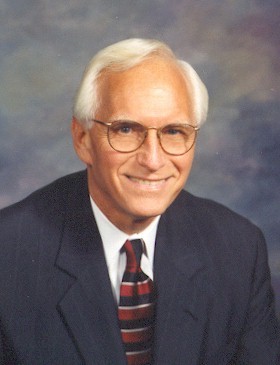 I have written much in recent days about the impact my mentor Mark Corts made on me. Let the reader be aware, that I do not intend to deify him, for one of the certain hallmarks of his life and ministry was to point people to Jesus Christ and to Him alone. However, God places people in our lives from whom we can learn, and he places others in our lives whom we can impact for Him. Dr. Corts made the most of every moment spent with others to impact them for the glory of God. I stated in my initial post about his death that I could never compile an enumerated list of lessons I learned from him, but that perhaps I could post one lesson learned every week or so. Knowing my own ineptitude, I will forget or fail to do this regularly, and knowing the universal depravity of man, most readers could care less. However, though many had the privilege of being mentored by this great man of God, and many more have had the privilege of being mentored by others who are equally gifted, many pastors and Christians have not had the privilege, and if I can impart some of the wisdom I have acquired from my days spent with Mark Corts, then I will be grateful to God for the opportunity to pass it on. I have no idea how long I will continue to do this regularly, and the "lessons" will be posted in no particular order -- only as they come to mind.
One of the first lessons I learned from Mark Corts was to make up time lost with your family. The work of ministry is like flubber. It will expand and fill up as much time or space as you allow it. That is not a bad thing. It is our calling. However, we also have been called in most cases to be husbands and fathers first, and when the work of ministry preempts those responsibilities, we are in danger of failing God in a terrible way. Most of us feel as if we are on duty, or at least on call 24 hours a day, seven days a week. That just goes with the territory of being a pastor. However, when the ministry takes away from time that we should be spending with our wives and children, we owe it to them to make it up.
For Dr. Corts, this meant that a late night of meetings or ministry activity should be followed by a morning or afternoon off the next day or as soon as possible. When I worked at Calvary, I was young, and eager, and ignorant (and unmarried, though engaged). I always volunteered for every opportunity to be involved in ministry. In a loving way, Dr. Corts pulled me aside and instilled this lesson in me. While he appreciated my willingness and my zeal, he cautioned me that if I did not make family a higher priority than ministry, there would come a day when both would disappear. He had seen it happen to too many people.
So, it has been my practice that when I have a weeknight meeting, or an emergency that takes me away from home, I make up that time lost with Donia and the kids as soon as possible. We all should try to take a day off every week, and when we can't, we need to make it up the following week or in the not too distant future. Our calling is to family first. We minister to others from the basis of a firm foundation in our home life. If the homelife begins to crumble, the ministry will crumble with it. Besides this, it is a good example to set for others in the church that their marriages and family ties ought to occupy a place of first importance for them.
The Baptism of Jesus: Mark 1:9-11
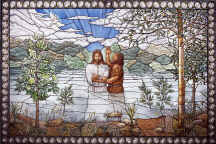
In the opinion of biblical scholar James A. Brooks, “The Jordan is one of the most overrated rivers in the world.”[1] He says this because of its diminutive size. Only in flood stage is the
John was in the wilderness, baptizing multitudes who came from Judea and
Throughout His earthly life, Jesus was called Jesus of Nazareth to distinguish Him from many other first-century Jews who bore the same name Yeshua. But
Now, we are struck with a very interesting question: Why would this Mightier One who was coming to baptize in the Holy Spirit travel more than 70 miles by foot or beast to the
I. Jesus was baptized to inaugurate His earthly ministry
We read in Luke 3:23 that Jesus was about 30 years old when He began His earthly ministry. Prior to this, apart from His birth, we only read of one episode in the life of Jesus. At the age of 12, He came to
These 30 years would be relatively unspectacular in comparison with His final three. He grew up in a devout family, learned a trade from Joseph, and experienced the life of a very normal young man. But the ordained time for Him to begin His mission of redemption came at the age of 30, and that is when He went out to the wilderness to be baptized by John. From this point on, His entire life played out in the public eye, preaching, teaching, and healing. And here at His baptism, that ministry was inaugurated by two remarkable signs.
First, Jesus saw the heavens opening, and the Spirit like a dove descending upon Him. In the Old Testament, prophets, priests, and kings were anointed with oil as a symbol of the Holy Spirit resting upon that person, empowering him for a specific task to which God had called him. Jesus did not receive a symbolic anointing. The Spirit Himself descended upon Him anointing Him to perfectly fulfill the role of the prophet, the priest and the king that the nation longed for and needed in the Messiah. The title Messiah or Christ means anointed one, and Jesus was uniquely anointed to fulfill His predetermined mission. Second, a voice came out of the heavens saying, “You are My beloved Son, in You I am well-pleased.” This indicated that this anointed one was chosen by and acceptable to the Father. No prophet could come and do what this One would do. No other priest could offer the sacrifice this one would offer. No other King could enthrone Himself in the hearts of mankind. This was God Himself, God the Son, coming into the world to fulfill the ultimate and final redemption of humanity.
Mark does not elaborate enough to indicate whether this was seen or heard by any other than Jesus. However, Luke makes it clear that the Spirit descended upon Him in bodily form like a dove. John the Baptist says in John 1:33, “I did not recognize Him, but He who sent me to baptize in water said to me, ‘He upon whom you see the Spirit descending and remaining upon Him, this is the One who baptizes in the Holy Spirit.” So, here at the
II. Jesus was baptized to identify with sinful humanity
The biblical testimony of the character of Jesus is unanimous. John the Baptist pointed Him out as the Lamb of God who takes away the sin of the world (Jn 1:29). The sacrificial lamb was required to be one without spot or blemish, and this is exactly the way Jesus was described. Peter referred to Him with those exact words in 1 Peter 1:19. Jesus said of Himself, “I always do what is pleasing to Him,” referring to God the Father (Jn 8:29). He said, “I have kept my Father’s commandments and abide in His love (Jn 15:10). He asked those who opposed Him, “Which of you convicts me of sin?” (Jn 8:46), and He received no answer. After scrutinizing Him in the face of false accusations, Pilate said, “I find no fault in Him” (Jn 18:38). The writer of Hebrews says He was tempted in all ways as we are “yet without sin” (Heb 4:15). Peter said in 1 Peter 2:22, “He committed no sin; no guile was found on His lips.” John said in 1 John 3:5, “In Him there is no sin.” So, if John’s baptism was one of repentance and confession with a view toward forgiveness, what in the world was the sinless Son of God doing in that water? Quite simply, He was there for you and me.
When John the Baptist protested against baptizing Him, Jesus said, “Permit it at this time; for in this way it is fitting for us to fulfill all righteousness.” The sinless Son of God stood in those waters as the second Adam. As the first Adam failed to obey the commandments of God as our representative, the second Adam would satisfy them. Paul said in Romans 5:19, “For as through the one man’s disobedience the many were made sinners, even so through the obedience of the One the many will be made righteous.”
God had commanded that when sin separated man from God, restoration was sought through repentance and confession. And in the waters of His baptism, He stood in our place before the Father, repenting on our behalf of the sinfulness of humanity. It was as if He stood there to say, “I stand in the place of unrighteous people, repenting on their behalf, taking their sins upon Myself, so that they may receive My perfect and unblemished righteousness.” He died for us on
I want you to imagine something with me. Imagine all those sinners coming to John to be baptized as they confess and repent of their sins. And imagine that pure and clean water being contaminated by the filth of all that sin. It was into this water that the Lord Jesus was immersed. The pure and spotless Lamb of God, staining Himself with our sinfulness, so that He could carry our sins to the cross. This is what Paul said in 2 Corinthians 5:21 – “He made Him who knew no sin to be sin on our behalf, so that we might become the righteousness of God in Him.” When He stood in the baptismal waters, Jesus identified Himself with the sinners He came to save. He did not stand there to repent of His own sin, for He knew no sin. He was there in my place, repenting before God of the sins that I have committed, and the sins that you have committed, and the sins of all humanity. And that brings us to the third reason for His baptism.
III. Jesus was baptized to symbolize his death and resurrection
There in the waters of the Jordan River, Jesus took His stand in the place of sinners, and laid Himself down to be buried beneath those waters, and was lifted up again. This is a picture, a symbolic foreshadowing of what He would do three years later on the cross of
I dare say there isn’t a person in this room who doesn’t believe that Jesus came and lived among us and died on the cross. You believe all the historical facts about His life and death. But perhaps, just maybe, there is one or more who has never come to Him in faith and repentance and personally received the benefits of His life and death. Perhaps you have never appropriated the loving and merciful forgiveness of God to their own life, and have never been washed by the Holy Spirit’s cleansing power in regeneration. To you, maybe Jesus is nothing more than an intriguing figure of human history. But He lived and died to be so much more for you. He is the Christ, the Messiah, who came into this world to save you from sin, and this very day He beckons you by the wooing of His grace to come to Him and receive Him.
Mark says that when Jesus was baptized, the heavens opened, and there was a public declaration that He was the Son of God. It is interesting to me that the Greek word Mark uses for that opening of the heavens is only used one other time in this gospel. It is a form of the word schizo, from which we get our word schism, and it means a splitting, or a tearing apart. The only other place Mark uses it is when Jesus died on the cross. Turn to Mark 15:38. The veil of the temple had for centuries indicated that mankind was not welcome in the presence of God. It indicated that our sinfulness could not come into the presence of His holiness. But when Christ died as the atoning sacrifice for our sins, that veil was miraculously and supernaturally torn in two from the top to the bottom. No human hand, no man-made device, could have done this. That temple veil was sixty feet tall, 30 feet wide, and the width of a man’s palm. The ancient Jewish writings indicate, perhaps somewhat exaggeratedly, that it took 300 priests to maneuver it. But when the Son of God died for man’s sin on
And I know today that if you make that same declaration, acknowledge Him as the divine Son of God, the Christ, your personal Lord and Savior, that heaven will be opened to you as well, for Jesus will save you from your sins, and wrap you in His righteousness, and impart to you eternal life.
[1] James A. Brooks, New American Commentary: Mark (Nashville: Broadman, 1991), 42.
Saturday, September 02, 2006
The Look and Smile of a Mentor (updated 9/5/06)
Today was an emotional day. My wife and I attended the funeral services of our pastor, Dr. Mark Corts. I want to post one quote from the service that really overwhelmed me with thoughts of the impact this man of God made on my life. His son Steve, pastor of Center Grove Baptist Church in Clemmons, said this:
"When he looked at you and smiled, he made you wish you liked yourself as much as he liked you."
I am in my office right now, just finishing up tomorrow's message and having a few moments of private grieving and reflection. I am thinking about a hundred times Dr. Corts looked at me that way. I still wish I liked myself and believed in myself as much as he did.
In the corner of my office, I have a picture of myself with him, taken on the day of my ordination. Beneath that picture sits the Bible I received that day. I wore it out in a couple of years preaching, so it just sits there now as a reminder of the charge placed on me that day. It is signed by many men, several of whom are with the Lord now. And up in the top corner of the presentation page is the inscription from Mark Corts. It reads:
"May our overflowing God meet your every need and give you a most fruitful ministry."
Under that Bible is a copy of his book, Making Sense of Your Faith, which was published the year I worked under his supervision. Inside it says:
"To Russ, a man God is going to use greatly."
I remember when he signed both those inscriptions. Each time, like a hundred other times, he looked at me and smiled. And he made me wish that I liked myself as much as he did. Today I praise God for the impact Mark Corts made on me. And I ask God to answer his prayer, that I would have that fruitful ministry, and be used by God in a great way.
During the funeral, several folks mentioned Dr. Corts' new book: The Truth About Spiritual Warfare: Your Place in the Battle Between God and Satan. It is so good to see this book in print with a major publisher. Dr. Corts' other books, ShareLife, The Caring Christian, and Making Sense of Your Faith, were all published in-house at Calvary, and it is my hope that this new book will make his wisdom available to a broader audience. When Ken Hemphill was speaking, he mentioned that Mrs. Corts had apologized to him for not getting him an autographed copy of the book before Dr. Corts died. Ken replied, "It's OK. He autographed my life." I would merely say Amen with a host of others whose life bears his imprint as well.
"When he looked at you and smiled, he made you wish you liked yourself as much as he liked you."
I am in my office right now, just finishing up tomorrow's message and having a few moments of private grieving and reflection. I am thinking about a hundred times Dr. Corts looked at me that way. I still wish I liked myself and believed in myself as much as he did.
In the corner of my office, I have a picture of myself with him, taken on the day of my ordination. Beneath that picture sits the Bible I received that day. I wore it out in a couple of years preaching, so it just sits there now as a reminder of the charge placed on me that day. It is signed by many men, several of whom are with the Lord now. And up in the top corner of the presentation page is the inscription from Mark Corts. It reads:
"May our overflowing God meet your every need and give you a most fruitful ministry."
Under that Bible is a copy of his book, Making Sense of Your Faith, which was published the year I worked under his supervision. Inside it says:
"To Russ, a man God is going to use greatly."
I remember when he signed both those inscriptions. Each time, like a hundred other times, he looked at me and smiled. And he made me wish that I liked myself as much as he did. Today I praise God for the impact Mark Corts made on me. And I ask God to answer his prayer, that I would have that fruitful ministry, and be used by God in a great way.
During the funeral, several folks mentioned Dr. Corts' new book: The Truth About Spiritual Warfare: Your Place in the Battle Between God and Satan. It is so good to see this book in print with a major publisher. Dr. Corts' other books, ShareLife, The Caring Christian, and Making Sense of Your Faith, were all published in-house at Calvary, and it is my hope that this new book will make his wisdom available to a broader audience. When Ken Hemphill was speaking, he mentioned that Mrs. Corts had apologized to him for not getting him an autographed copy of the book before Dr. Corts died. Ken replied, "It's OK. He autographed my life." I would merely say Amen with a host of others whose life bears his imprint as well.
Subscribe to:
Posts (Atom)
