
I tell you this story today because it is fresh in my mind, and because it provides a suitable introduction to the passage before us today. Like Travis and his men, the disciples are faced with a sudden storm – not one of cannon balls and rifle fire, but a literal storm of wind and waves. Like those
Do you not care that we are perishing? That was the question of Travis to all
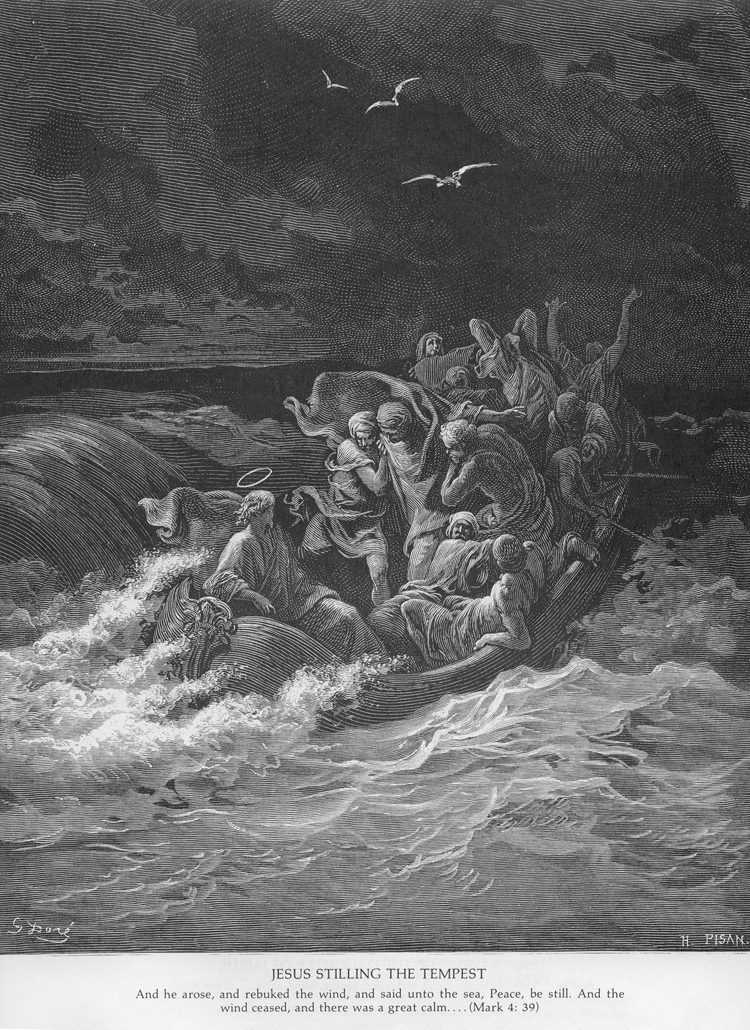
Here in this passage, we find much action and little dialogue. The details given bear the distinct flavor of an eyewitness account, which is to be expected since the early church recognized Mark’s gospel as coming from information provided by Peter. So vivid was this event and the lessons learned from it in the memory of Peter that he was able to recount the story with near cinematic detail. Among those details are two questions that Peter recalls asking. One in verse 38: Teacher, Do you not care that we are perishing? Another in verse 41: Who then is this that even the wind and the sea obey Him? I believe these questions serve as two great focal points for us in the study of the text today as we seek to understand and apply God’s word to our lives and to the church today. Like the disciples of old, we are faced with many storms in life, both literal and figurative, and if we are to survive them, we must learn the lessons they learned from the Lord in the midst of their great storm.
I. Teacher, Do You Not Care? (v38)
After a long day of preaching and teaching, Jesus calls the disciples to withdraw to the other side of the
During the journey, this question is asked: “Teacher, do you not care that we are perishing?” What precipitates this question? Several factors:
A. A Sudden Storm (v37a)

This storm is a severe one – the Greek word used to describe it is the same word used in ancient times for hurricanes, squalls, and other furious storms. The NASB calls it a fierce gale of wind. The NIV calls it a furious squall. No seasoned sailor would take his boat out in those waters knowing that such a storm was brewing. This storm arose suddenly, a factor leading to their questioning of Jesus.
Did He not know that He was leading them into a storm? If He knew, then did He not care that He was leading them out into deadly conditions? Just as frequently as storms are likely to arise on the
But the sudden storm was not the only factor that led to the questioning of Jesus. Notice another factor:
B. A Sinking Ship (v37b)
Mark tells us that the waves were breaking over the boat so much that it was filling up with water. The wording here implies that the waves were beating upon the boat, and throwing water over the boat. This word used for filling up is the same word Mark uses in 15:36 to describe the filling up of a sponge. It is the word John uses to describe the filling of water pots in Jn 2:7. You want to fill up sponges and water pots, that’s fine. You go filling up boats, and that’s a problem. The boat is going to sink.
With their boat on the verge of sinking, the disciples cry out, “Teacher, do You not care?” There are times in our lives when the wind whirls around us and the waves wash over us, and we wonder if we will stay afloat. The poet e. e. cummings said, “King Christ, this world is all aleak, and life preservers there are none.” It seems in those moments that we will drown in despair as we question the Lord of His concern, or seeming lack thereof, for us. This is true, not only in our lives individually, but for the
There is yet another factor, the most obvious one in the text, which gives rise to the question of Christ’s care. Not only is there a sudden storm, and a sinking ship, but we read on and find …
C. A Sleeping Savior (v38)
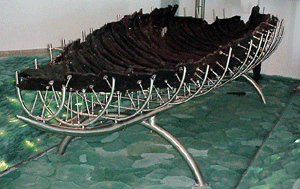
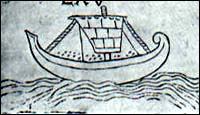
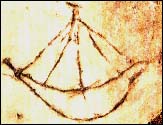
On those ancient fishing boats like the one discovered in 1986, the bow and stern both appear to have been covered with a deck where someone could sit or lie down. On the boat, there would be either a sandbag used for ballast, or a seat cushion for the rower, or in some cases a pillow kept for the comfort of those not involved in rowing or fishing. Whichever was the case on this particular boat, the Lord Jesus lay down His sweet head for some shut-eye on one or the other of these “cushions.” It is interesting that this account (and its parallels in Matthew and Luke) is the only time we read of Jesus sleeping in the Gospels. That does not mean it is the only time He ever slept, but it is the only time His sleeping is recorded.
Why would Jesus sleep? Firstly, because He was fully human. He was more than fully human, as we will see momentarily, but being fully human, He needed to rest His body as much as you and I do. God did not give the command of a Sabbath arbitrarily. Our bodies need rest. We need to work, and work hard, but we need to rest also. Without that needed rest, we are limited in the work we can do. Secondly, He slept because He was tired. Now I know you may think, “Why was He so tired? All He’d been doing was preaching.” Let me tell you from my experience, preaching is exhausting. I am never more fatigued than at about 12:15 on Sunday afternoon. It takes deliberate resting through the afternoon to build up strength to do it again on Sunday nights. And Jesus probably wasn’t preaching half-hour sermons. Add to this the constant demand of the people upon Him, which we saw in Chapter 3 was hindering Him from eating, so it is no stretch to imagine that it hindered Him from regular sleep as well. But thirdly, I think we can say with confidence that Jesus slept because of His abiding assurance that His Father was in control of everything that was going to take place. One writer speaks of the “untroubled serenity of divine omnipotence.”[4] He needed not fear what might happen if He closed His eyes. God’s sovereign and providential control of the affairs of this world is just as constant whether Jesus is asleep or awake. When you are confident of that, you can sleep sound.

Their assumption is apparent – surely He knew there was a storm, surely He felt the rocking of the boat and the splashing of the water. But the fact that He did nothing to help, not even man a bucket to dip the water out must mean that He could care less if they all drown there. They presume that He was neglecting His duty to protect them and come to their aid. Their word perish means destruction or ruin, indicating the vividness of their turmoil. These were experienced fishermen who had weathered many storms, but never anything quite like this. How can He be silently sleeping when all this is going on around us? Surely He does not care!
In the midst of overwhelming storms, are we not often quick to join them with this question? When God doesn’t arise immediately to alleviate our distress, we are quick to assume that He is indifferent to our need. And in our cry to Him, there is that subtle tone of rebuke – “Jesus, how dare you slumber when I need you now!” And there is that demand of entitlement that says, “You owe me deliverance,” wherein we mistake the benefits of His grace as a debt that we deserve to collect.
He may be silent. You may deem His response to be slow in coming. You may feel slighted by His seeming indifference to your travail. But this does not mean that He does not care for you. Even in that state of soul despair, we ought to do exactly as these disciples did, and cry out to Him, but we must not seek to rebuke or reprove Him as these did. We must do so with humble faith, and a recognition of our own state – we do not deserve His aid. If He gives it, and He often does, it is of grace and not merit. We do not deserve His providential intervention in our circumstances. Thank God, He does not always let us suffer what we deserve. In His grace He will arise, in His own way and in His own time, and come to our aid just as He does here.
There is this question: “Do you not care?” Oh, yes, He cares. And we must not let sudden storms, sinking ships, or the silence of a seemingly sleeping Savior cause us to think He doesn’t. But there is another question asked in verse 41.
II. Who Then Is This? (v41)
Verses 39 and 40 contain statements of Jesus. In verse 39, He speaks to the wind and sea. In verse 40, He speaks to the disciples. Both statements are rebukes. And both give rise to this additional question of the true identity of Jesus.
A. He Speaks to the Wind and Sea (v39)
He speaks with rebuke, demanding silence and stillness. There is here a repetition of two words used in 1:25 in Jesus’ dealing with an unclean spirit. He speaks to this storm in the natural realm the same way He speaks authoritatively over the demons of the spiritual realm. R. T. France says, “He rebukes the wind as if it were an animate being, and addresses the lake as if it were an unruly heckler.”[5] “Be still” here is our translation of a Greek word meaning “to silence or muzzle.” It is a passive perfect command, and might be rendered, “Put a muzzle on and keep it on!” John Calvin points out that the lake did not have any perception, but rather Jesus speaks in this way to demonstrate the power of His voice reaching even the elements.[6] Just as God took what was formless and void in Genesis 1:2, and formed it and filled it by the power of His Word, so here, Christ speaks stillness and silence, and “the wind died down and it became perfectly calm.”
Now there are those who do not accept the miracles found in the Bible as authentic, historical events. For example, 19th Century German theologian Heinrich Paulus said Jesus did not speak to the sea and order it to be calm, but rather cried out, “What a dreadful storm! It must be over soon!” And then the disciples misunderstood His words to be the effective cause of the sudden calm.[7] However, I would rather take the word of those who were there, and those who were experienced fishermen on the
Who is He? Well, we saw in His sleeping that He was fully human, but we said that He was much more than that – and here we see how much more. Turn in your Bibles to Psalm 107 as we read verses 23-30:
Those who go down to the sea in ships, Who do business on great waters; They have seen the works of the Lord, And His wonders in the deep. For He spoke and raised up a stormy wind, Which lifted up the waves of the sea. They rose up to the heavens, they went down to the depths; Their soul melted away in their misery. They reeled and staggered like a drunken man, And were at their wits’ end. Then they cried to the Lord in their trouble, And He brought them out of their distresses. He caused the storm to be still, So that the waves of the sea were hushed. Then they were glad because they were quiet, So He guided them to their desired haven.
So who is this? Is He just a man? No He is so much more than that – He is fully human, therefore He sleeps in the stern. But He is fully GOD, therefore He silences the storm and stills the sea with the power of His word. Yet His rebuke of the sea is perhaps not so intense as His rebuke of His disciples which we see in verse 40 as …
B. He Speaks to His Disciples (v40)
When Jesus says, “Why are you afraid,” the word He uses for afraid is a totally different Greek word than the one found in verse 41. This one has to do with the fear of a coward. When the Bible was translated into the Uduk language of
But in the face of this divine revelation, Mark tells us that they became very much afraid. You don’t have to be a Greek scholar to pick up on this: he uses the words phobon megan. Literally, they feared a great fear. That is a common construction in Hebrew used to intensify something, and here Mark just brings it into the Greek language. It is ironic that their fear in verse 41 is more intense than the fear of verse 40. And so we will see this kind of fear in response to Jesus four more times in Mark’s Gospel. Indeed, the presence of the supernatural is more frightening to humanity than the most destructive natural disasters we may face. These disciples are better able to handle the possibility of their own death at sea than the possibility that God Himself is standing in their midst.[8]
“Who then is this?” they ask. It is the one question that makes faith possible. In Exodus 14:31, after coming through the Red Sea and seeing the Egyptians perish there, the Bible says that Israel saw the great power which the Lord had used against the Egyptians, and the people feared the Lord, and they believed in the Lord. When God reveals Himself to humanity, the only appropriate response is one of awe, reverence, and fear. Rightly directed, that fear produces faith. It did for
Mark’s original readers were the Christians in
Perhaps today, you find yourself in the midst of a sudden and severe storm on the sea of your life. I have but one question for you – Is Jesus in the boat with you? Mark has told us that there were other boats out on the sea that dark and stormy night. But he does not tell us what became of them. He does tell us that those on board with Jesus were saved. The storm never has the last word. Christ always does. So why take your chances on a ship where there is no Savior? Much better off will you be to have Christ on board with you, even though it may seem He is sleeping at the moment, He will arise and save His own. He will not always calm the storm, but His presence is enough to calm our souls so we can know that He will bring us through. So, is He in the boat with you? If not, then I would urge you with all that is in me to jump ship and swim for your life to climb aboard with Him by calling out to Him as Lord and Savior of your life. And if He is, then fear not. The storms will come, and at times He may be silent, but He cares, and He is able to speak to the storm, to the sea, or to your soul words of peace and calm if you trust in Him in the midst of the storm.
[1] See
[2] Charles R. Erdman, The Gospel of Mark: An Exposition (Philadelphia: Westminster, 1945), 77.
[3] Edwards, 148.
[4] R. T. France, The New International Greek Testament Commentary: The Gospel of Mark (
[5]
[6] Calvin, quoted in C. E. B. Cranfield, The Cambridge Greek Testament Commentary: The Gospel According to St. Mark (Cambridge: Cambridge, 1966), 174.
[7] Quoted in David Garland, The NIV Application Commentary: Mark (Grand Rapids: Zondervan, 1996), 194.
[8] Edwards, 152.


1 comment:
You did an excellent job explaining everything Sunday in the pulpit but the photos really enhanced your message. Thanks for including them i the blog.
Post a Comment